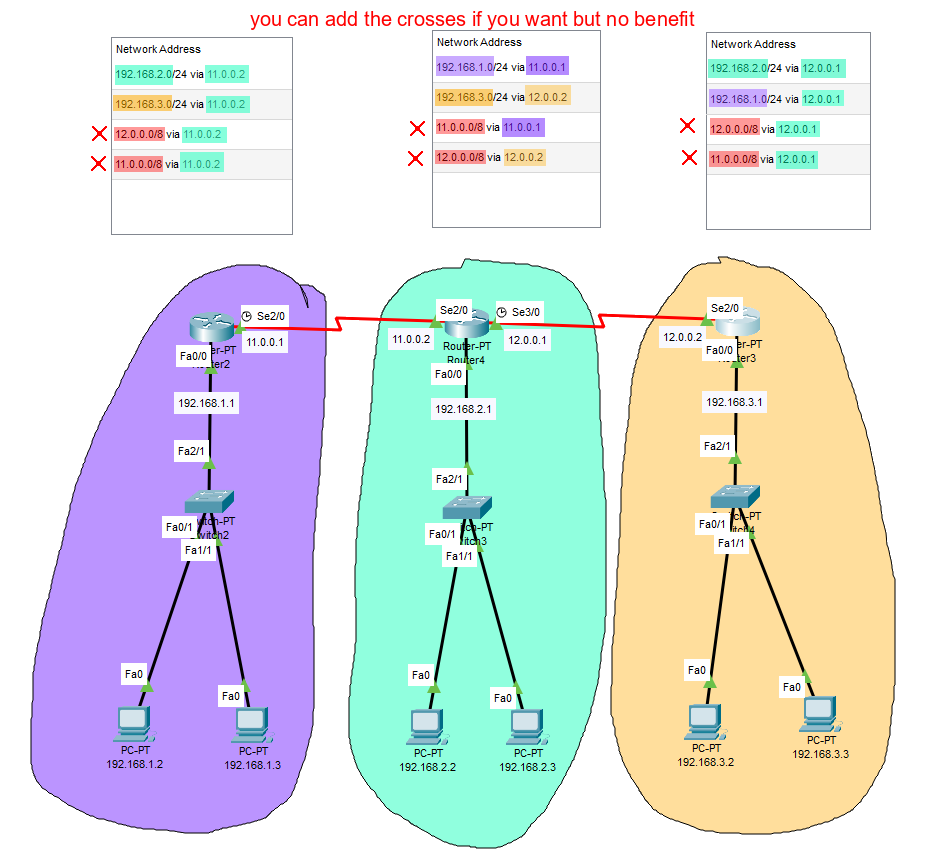
| Static Routing | Dynamic Routing |
| Uses no routing protocol | Uses routing protocols(RIP, IGRP, EIGRP, OSPF, ISIS) |
| Admin manually configures the routing table | Routing protocols makes entry to routing table |
| Suitable for small networks | Suitable for Large networks |
| Link failure effects the network | Link Failure doesn’t effects the network |
| Security is high | Security is low |
| Route doesn’t changes automatically | Route changes automatically according to changes in network |
Static routing
| Advantages | Disadvantages |
| Easy to implement | Configuration complexity increases exponentially |
| Very secure | If a link fails, cannot reroute |
| predictable | |
| Power friendly |
Autonomous systems
Collection of IP networks + Routers under the control of single entity that implements a common routing policy to internet
All routers sharing same routing table information are in same AS


Link State
Distance
Path Vector
(OSPF)
Vector
(BGP)
(RIP)
Routed protocols: determines how packets are addressed and delivered IP & IPv6
Routing protocols: determines best path RIP, EIGRP, OSPF
| If packet is lost | cmd output "request time out" |
| If route not in routing table | "Destination host unreachable" |
Administrative distances
Metric that indicates trustworthiness of particular routing source
Value ranges from [0, 255]
0 = most trusted
255 = least trusted
Route with lowest AD will be placed in routing table
If both advertised routes have same AD, load is divided among each router
AD is usually static and is requested every time the router wants to transmit a packet

Routing Protocols Categories
Distance Vectors
Counts number of jumps, hops
Route with least hops is considered best
RIP (Routing information protocol)
IGRP (Interior gateway routing protocol)
Link state
Uses dijktras/Astar to calculate shortest network path
OSPF(Open shortest Path first)
ISIS (intermediate system to intermediate system)
Hybrid
Uses Distance + Link states both
Routing information protocol (RIP)
Distance Vector routing protocol
Sends complete routing table to all interfaces every 30 seconds
Maximum allowable hop count of 15
Works very well in small networks
Open Shortest Path First (OSPF)
Link State routing protocol
Uses Dijkstra algorithm, shortest path tree is constructed and routing table is populated with best paths
Scalable
Unlimited hop count
Supports VLSM
Static Routing
RIP
OSPF


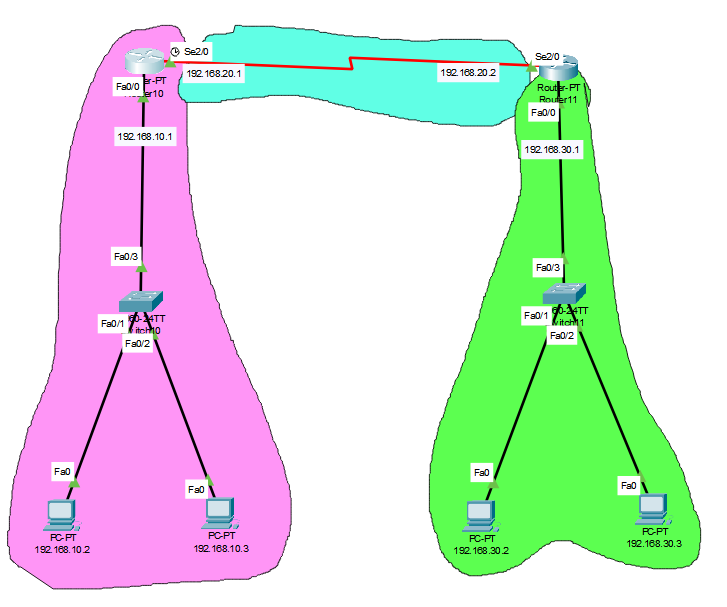


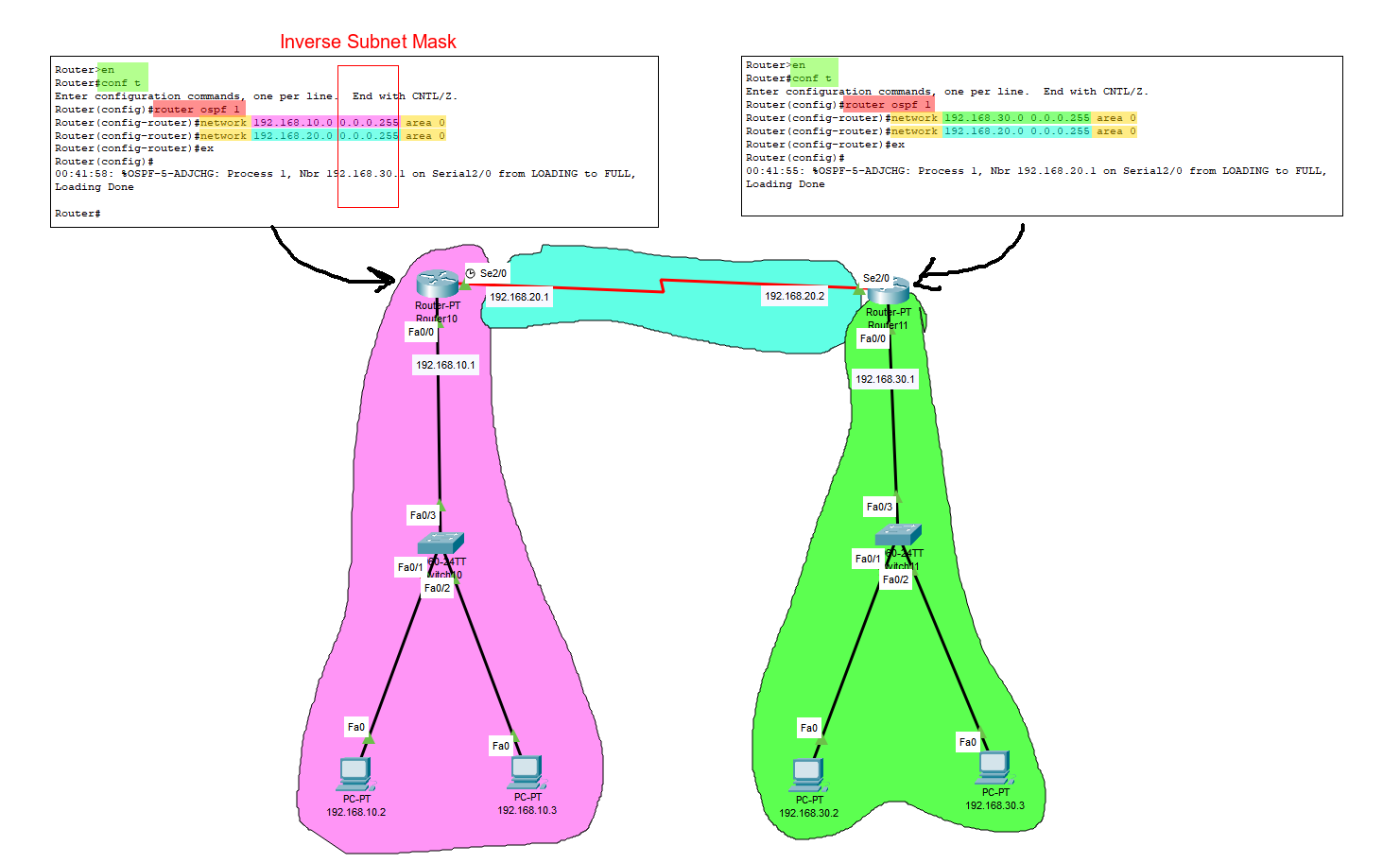
Specify all network parts of networks connected to your router